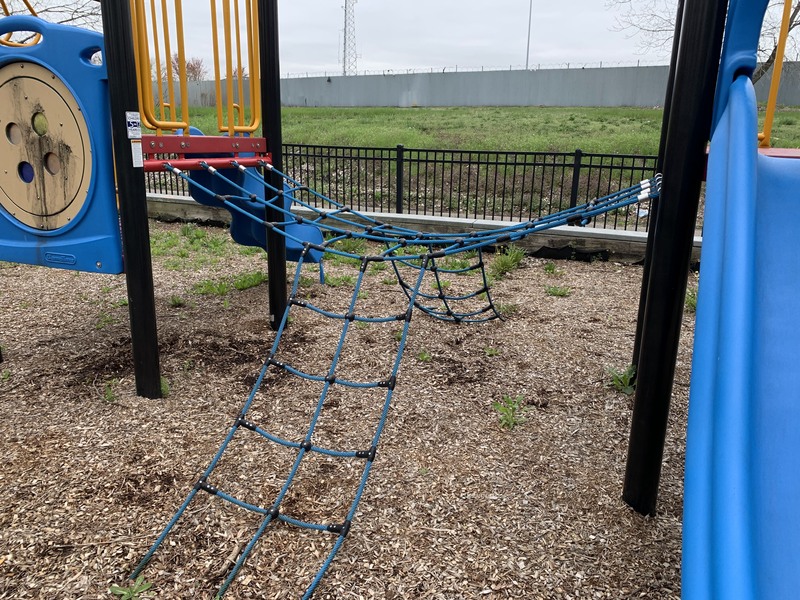
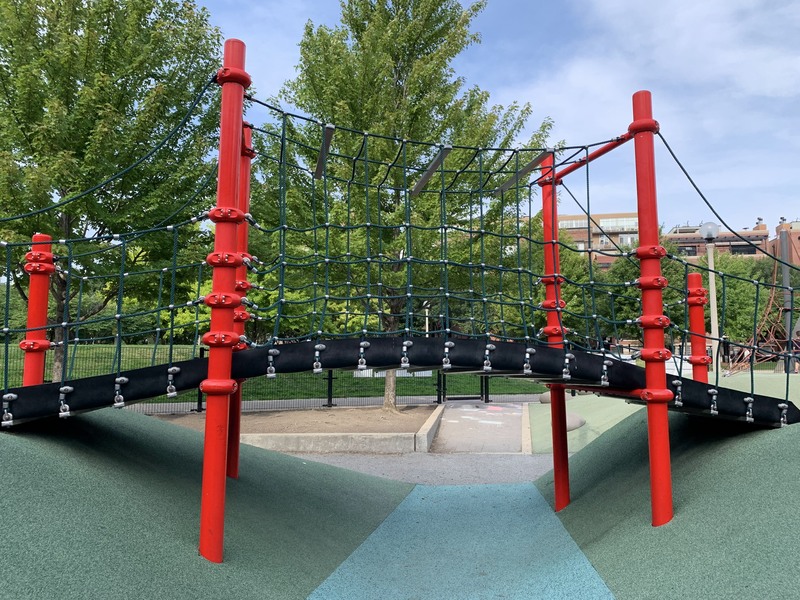
This is a bridge element that connects two platform consisting of rope netting strung between the two platforms (forming a tube of sorts) with a four black belt steps on the bottom. The top also features two sloping metal beams so advanced climbers can traverse the top of the rope tube without setting foot on on the black belt steps.
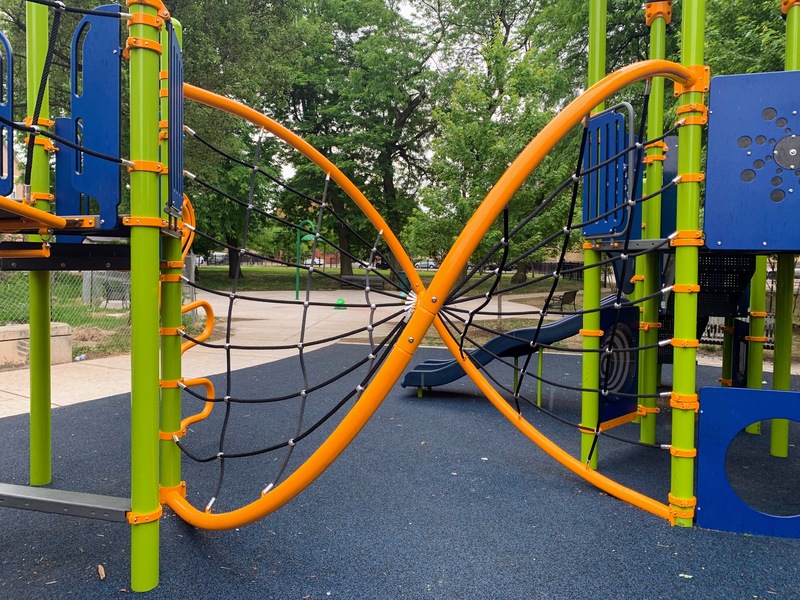
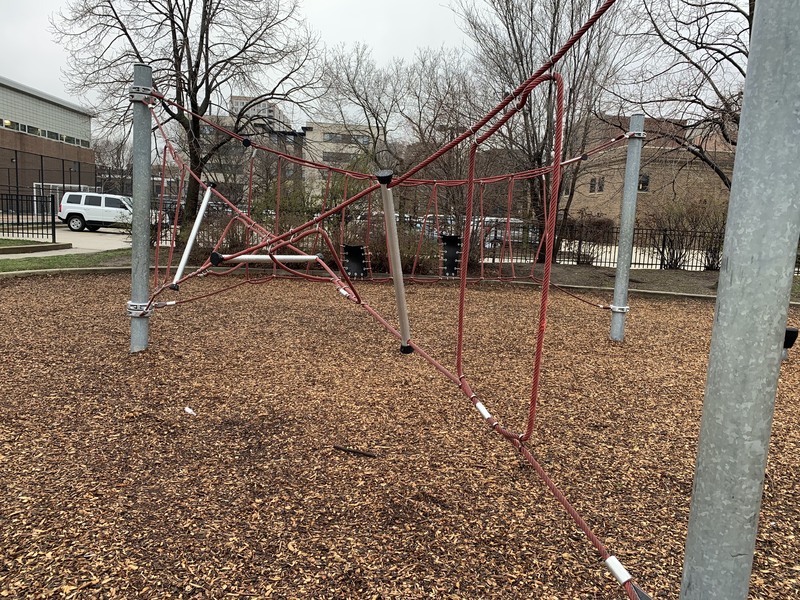
A large element with a cargo net 'twisted' between two platforms and supported by two support beams that 'cross' in the middle; looks like a bowtie from the side.
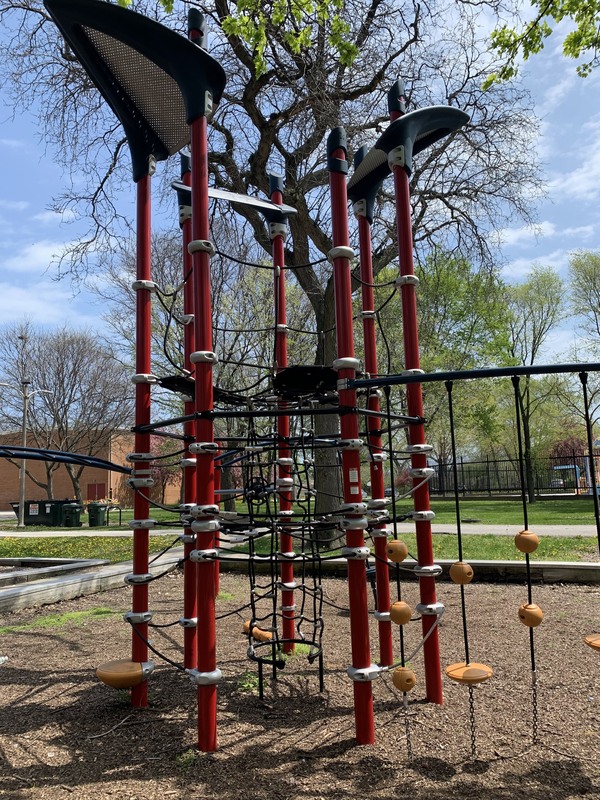
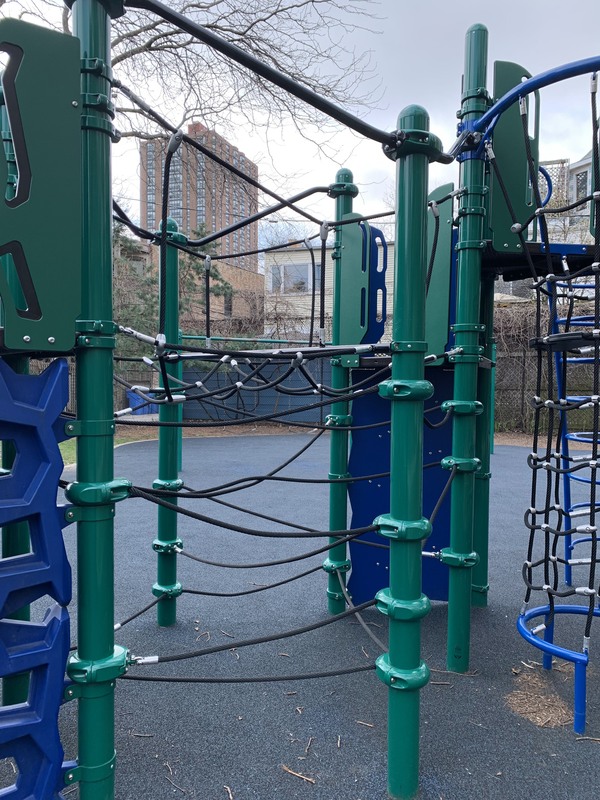
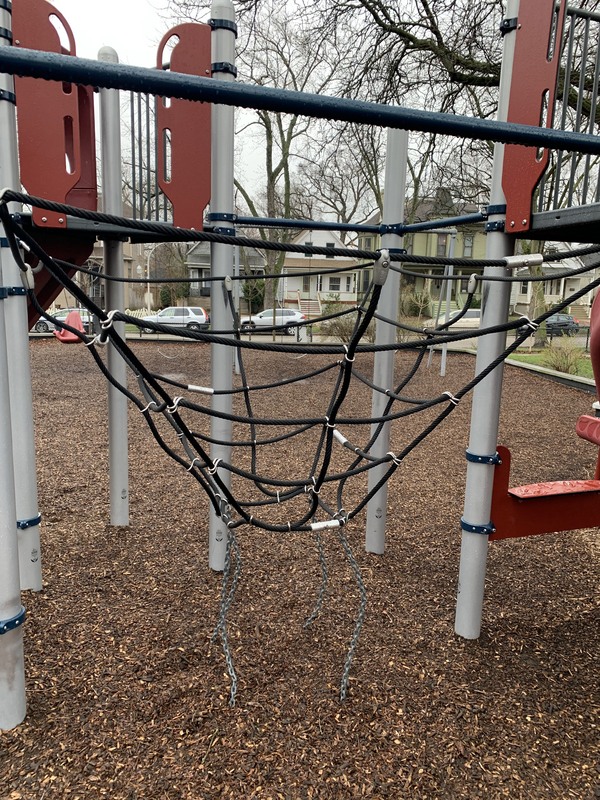
A large rope net climbing element with seven vertical columns with a central rope net tube ladder, a mess of ropes connecting the columns to the tube ladder and a few black belt seats.
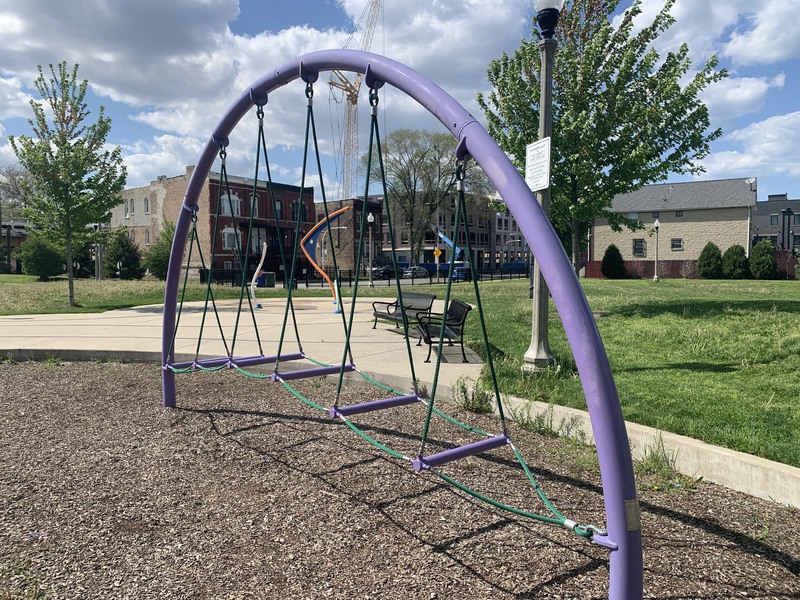
A large metal arch with a rope traverse element. The rope traverse element has two ropes running parallel to each other and the ground with planks between the ropes. There are also vertical support ropes forming the legs of a isosceles triangle.
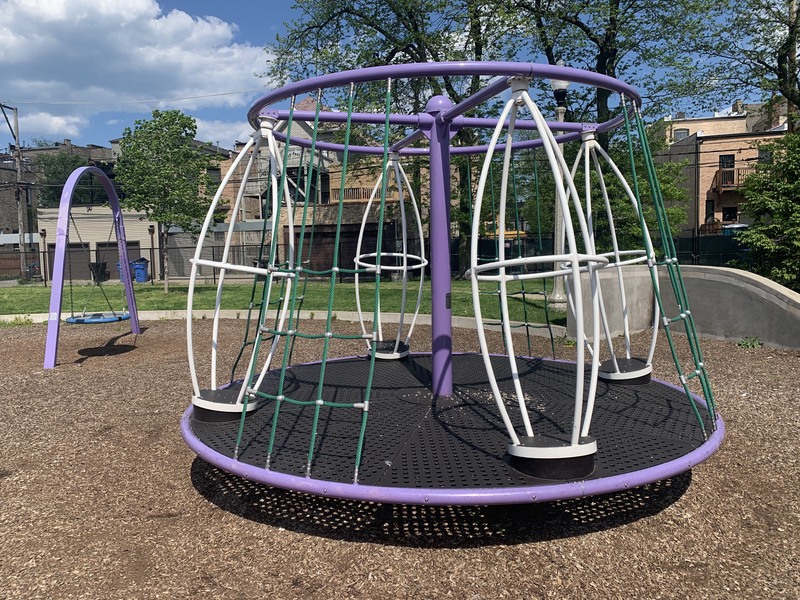
A huge standalone element consisting of a large circular metal platform with four vertical climbing nets and four metal pods (nets and pods alternate evenly around the circumference of the platform).
A rope net element that connects two platforms via a bridge and is connected to the ground by two 'wings' that are intersect the center of the bridge perpendicularly.
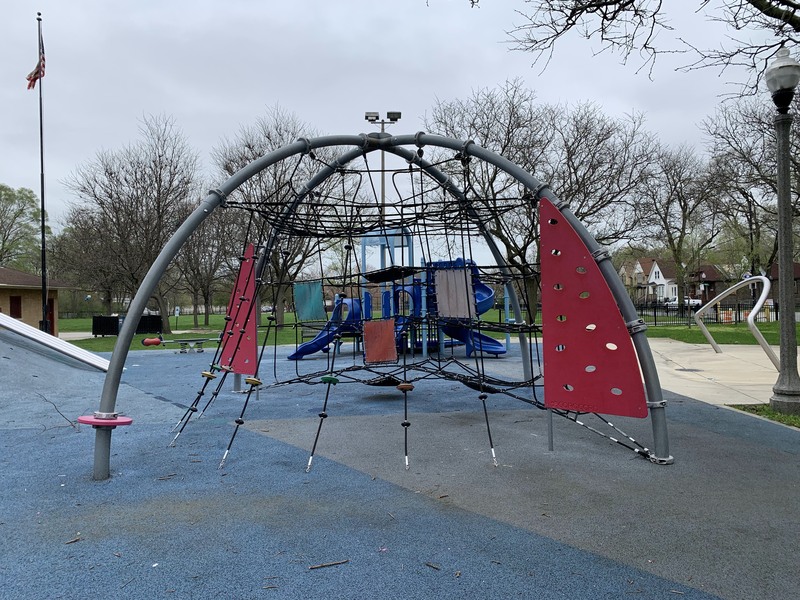
A large, standalone rope/net climbing element with two metal arches forming the main structure. Inside that structure are four levels created by rope netting and a few panels with voids.
A climbing element consisting of vertical metal poles supporting ropes and black belt circles in layers; each black belt circle has a hole cut from the middle to facilitate climbing.
A climbing element meant to be traversed consisting of a horizontal rope net ladder (slightly twisted) with four vertical support ropes and a handle in the middle.
A rope net element created by a horizontal rope ladder (two parallel ropes and rope rungs) twisted once between two vertical metal support poles with three metal bars as rungs.